
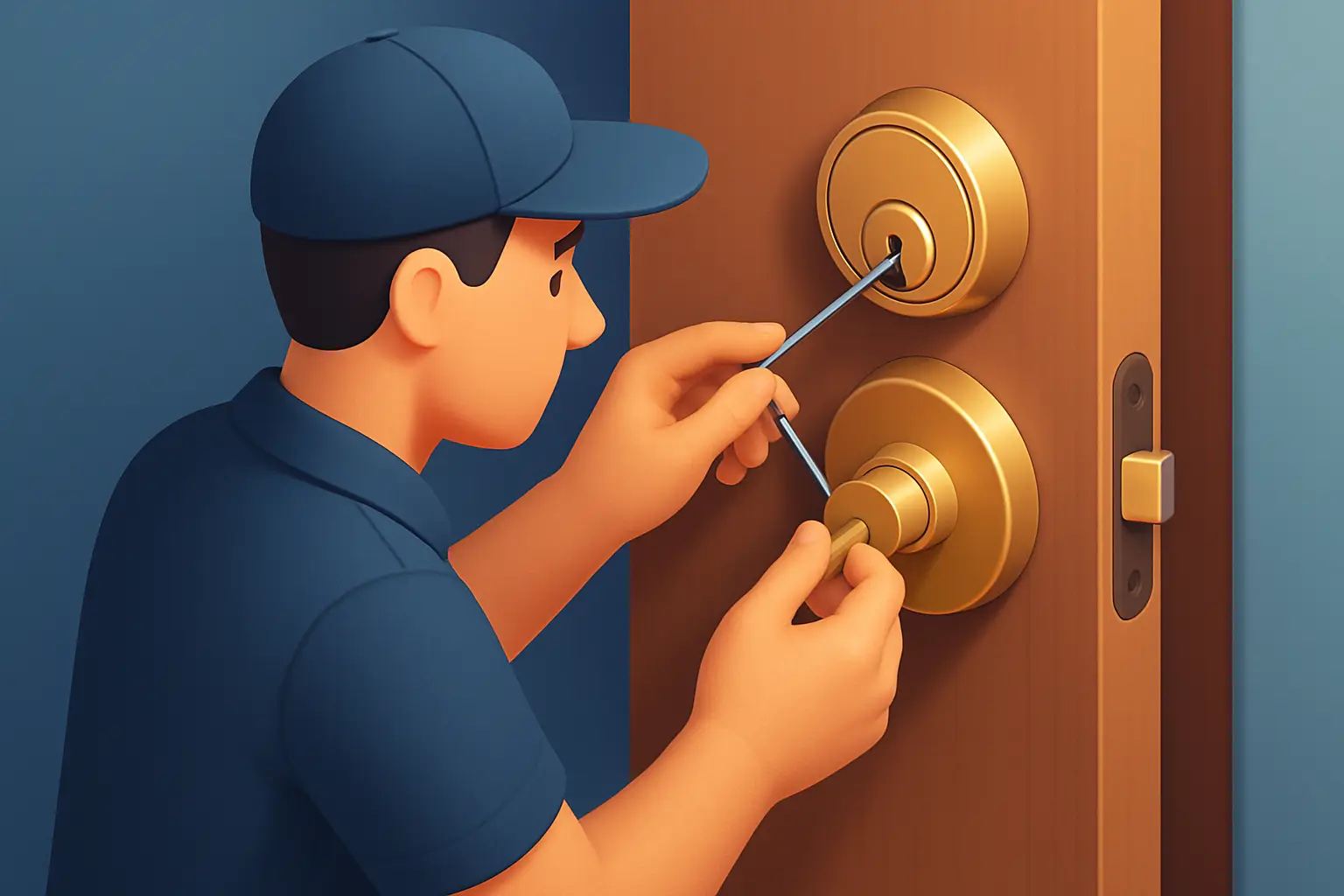
You shut the door. You hear the deadbolt click. Your keys are on the kitchen counter.
That moment is why deadbolts exist - and it is also why people ask the same question on repeat: can a locksmith open a deadbolt?
Yes. In most situations, a professional locksmith can open a deadbolt. The real question is how they do it, whether it will damage anything, how long it takes, and what a fair price looks like when you are standing on the porch and you need help now.
Can a locksmith open a deadbolt?
In plain terms: a locksmith can open most residential deadbolts, including single-cylinder deadbolts (key outside, thumbturn inside), double-cylinder deadbolts (key both sides), and many smart deadbolts.
But “yes” comes with a few honest caveats. The ability to open it cleanly depends on the lock type, the door condition, and what is happening inside the lock. A deadbolt is designed to resist common forced-entry tricks, not trained entry methods.
If you are locked out, a locksmith’s goal is usually simple: get you back in with the least damage and the least cost. Sometimes that means picking. Sometimes it means bypassing hardware. Sometimes - if the lock is failing or the situation demands it - it means drilling and replacing.
What changes the answer from “easy” to “it depends”
Two deadbolts can look identical from the curb and behave completely differently on the tools. Here is what typically moves the job from quick to complicated.
The deadbolt’s design and security features
Basic deadbolts are often straightforward for a skilled tech to pick or open with non-destructive methods.
Higher-security deadbolts can include features like spool pins, mushroom pins, hardened inserts, restricted keyways, or drill-resistant components. Those features do not make the lock “locksmith-proof.” They do make the job slower and more technical, and sometimes they push the decision toward replacement instead of prolonged picking time.
Whether it is actually “locked” or just stuck
A lot of “deadbolt lockouts” are not true lockouts. The bolt may be extended, but the problem is really door alignment, a sagging door, a tight strike plate, or weather swelling. When that happens, the lock cylinder may turn but the bolt will not retract, or the key will not turn at all because the bolt is bound up.
That is good news, because the fix may be adjusting pressure on the door, manipulating the bolt, or correcting alignment. The lock may not need to be drilled or replaced.
Broken keys, worn cylinders, and internal failure
If a key snapped off in the cylinder or the cylinder is worn to the point that pins will not set correctly, picking can become unreliable. A locksmith can still usually get you in, but the smartest move may be to open the door and then replace or rekey the deadbolt so you are not calling again tomorrow.
Smart deadbolts and electronic issues
Smart locks fail in boring ways: dead batteries, jammed motors, misaligned bolt, or an app that cannot connect. Many smart deadbolts still have a physical keyway that can be opened like a standard lock.
If there is no keyway, entry methods shift toward removing hardware or using manufacturer-specific procedures. That is another “it depends” scenario, and a clear phone description helps a lot.
How a locksmith opens a deadbolt (and what you should expect)
Most people worry about one thing: “Are you going to destroy my door?” A fair locksmith starts with the least destructive option and escalates only when necessary.
Non-destructive entry
For many standard deadbolts, picking is the cleanest option. It takes training, feel, and the right tools. When it works, the lock remains intact and you are back inside with no visible damage.
A locksmith may also use bypass methods depending on the door setup. Some doors and hardware combinations have weaknesses that allow entry without touching the cylinder much. Those are case-by-case and should never involve “mystery tricks” that damage the door.
Controlled destructive entry (when it is the right call)
Sometimes drilling is the fastest, safest, and ultimately cheapest option - especially if the deadbolt is failing, severely worn, or built to resist picking to the point that time on-site becomes the biggest cost.
Done correctly, drilling is targeted. The goal is to defeat the cylinder and then replace it. A professional should explain what will be replaced (cylinder only vs. full deadbolt) and what it will cost before doing it.
Hardware removal and replacement
If the issue is a broken interior thumbturn, loose mounting, or a damaged tailpiece, the best fix may be removing and replacing parts. This is also common with smart deadbolts that have internal mechanical problems.
Will the deadbolt be damaged?
Often, no. Many deadbolts can be opened without damage.
But you should be prepared for a realistic range:
If the lock is pickable and functioning normally, damage is unlikely.
If the lock is jammed, the door is misaligned, or the cylinder is failing, there may be minor cosmetic impact during troubleshooting, or the cylinder may need replacement.
If drilling is required, the cylinder will be damaged by design and replaced afterward. A careful locksmith will also protect the door and hardware as much as possible during that process.
A simple rule: if someone immediately jumps to drilling without checking basic non-destructive options (and without explaining why), that is a red flag.
How long does it take?
On-site time is usually measured in minutes, not hours, but the range matters.
A straightforward deadbolt lockout with a standard cylinder can be quick.
A high-security deadbolt, a smart lock with no keyway, or a door that is binding the bolt can take longer because the locksmith has to diagnose the real cause, not just “open a lock.”
Time also depends on access. If the deadbolt is on a metal door with a tight wrap-around plate, or if the hardware is installed in a way that blocks certain tools, the process can slow down.
What a fair price looks like (and what does not)
Locksmith pricing should not feel like a guessing game. In this industry, the biggest problems come from bait-and-switch quotes: a too-good-to-be-true number on the phone that balloons once the technician arrives.
A fair quote usually accounts for three things: the service call, the labor to get you in, and any parts you approve (rekey, new deadbolt, new cylinder, smart lock hardware).
If you want to protect yourself, ask direct questions before anyone is dispatched: What is the total price range for a deadbolt lockout? What conditions change the price? Are there after-hours charges? If drilling is needed, what is the cost including replacement parts?
A trustworthy locksmith can answer those without dodging.
What you can do while you wait (and what you should not)
If you are locked out, it is tempting to start trying things. Some of those things make the locksmith’s job harder and more expensive.
Do check for an unlocked back door, a garage entry, or a window that is already open - without forcing anything.
Do not start drilling your deadbolt, prying the door, or “credit carding” the latch. A deadbolt is not a spring latch, and brute force often damages the door frame or the strike plate area. That repair can cost more than the lockout.
If the key is turning but the bolt will not retract, try gentle pressure on the door (push or pull) while turning the key. Do not muscle it. If the key feels like it is going to snap, stop.
Deadbolt lockout vs. rekey vs. replacement
Getting back in is step one. Step two is deciding whether the lock should stay as-is.
If you simply locked your keys inside and your keys are accounted for, you probably just need entry.
If your keys were stolen, you moved into a new place, a tenant moved out, or you are not sure who has copies, rekeying is usually the smart play. It keeps the same hardware but changes the key that operates it.
If the lock is worn out, sticking, or you want a security upgrade, replacement may make more sense than rekeying. A good locksmith will explain the trade-off in plain language and let you choose.
What to say when you call
The fastest, cleanest service starts with clear info. When you call, be ready to describe the deadbolt type (single-cylinder, double-cylinder, smart), whether the key is available, and whether the key turns at all.
If you can, take a quick photo of the exterior side of the deadbolt and the door edge and have it ready. That helps a dispatcher set expectations and helps the technician arrive prepared.
If you need rapid-response, fairly priced help, FAST & FAIR LOCKSMITH is built for exactly that - quick arrival, straight answers, and no surprise fees.
When a locksmith might refuse the job
A legitimate locksmith may decline service if ownership or authorization is unclear. That is not them being difficult. That is them protecting you, your property, and their license.
Expect to show ID, proof of residence, or authorization from a property manager. If your ID is inside the home, a locksmith can often verify you another way once entry is made, but you should be ready for questions.
The bottom line on deadbolts
Can a locksmith open a deadbolt? In most cases, yes - and usually without wrecking your door.
If you want the best outcome, focus on two things: give clear details on the phone, and choose a locksmith who quotes like a professional and works like they care about the condition of your door.
A deadbolt is supposed to keep strangers out. The right locksmith gets you back in without turning a bad day into an expensive repair bill.