
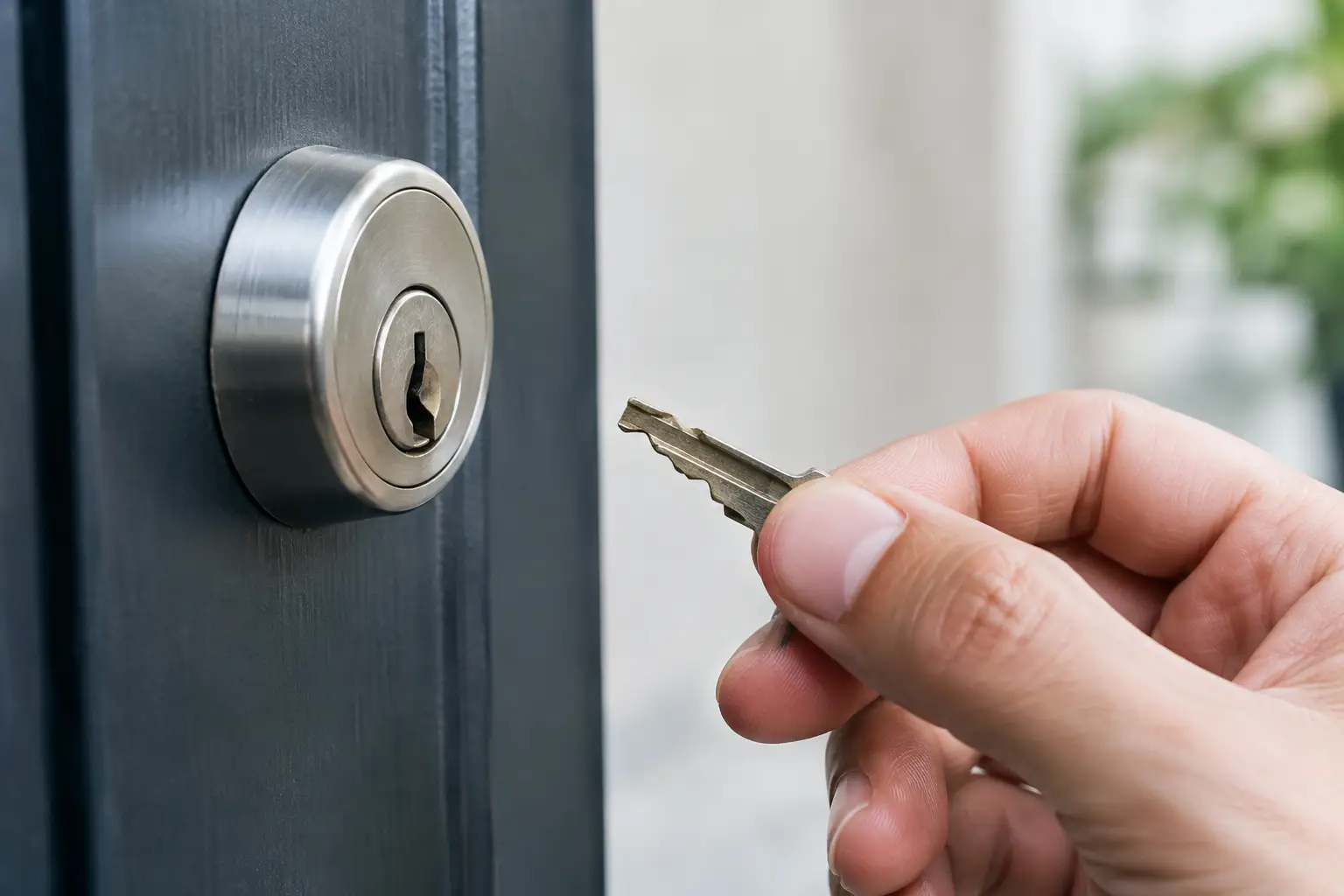
A key snaps in the lock at exactly the wrong time: when you are late for work, standing outside your home, or trying to close up a business. The next few minutes matter. Careful broken key removal can preserve the lock and get you moving again. Forcing the situation can turn a simple service call into a damaged lock, a lockout, or an avoidable replacement.
Stop Turning the Lock
The first rule is simple: do not keep turning the key head, the remaining key fragment, or the lock cylinder. A broken key usually means something was already binding. Continued pressure can push the broken piece deeper, bend internal lock components, or snap off a tool inside the keyway.
If part of the key is sticking out, resist the urge to grab it with household pliers. Pliers often slip, crush the exposed metal, and push the fragment farther in. If the key broke while the lock was turned, do not try to rotate it back with a screwdriver or another key. That is how a repairable lock becomes a replacement job.
Take a breath, leave the lock alone, and look at what actually happened. Is the key fragment visible? Is the door open or locked? Is this your front door, an office, a mailbox, a car ignition, or a vehicle door? The right response depends on the lock and how accessible the broken piece is.
Why Keys Break in the First Place
Keys rarely break for no reason. Most failures come from wear, resistance, or force. Older brass keys can develop weak spots after years of use. A copied key that was cut poorly may bind every time it enters the lock. Dirt, corrosion, worn pins, a misaligned door, or a failing ignition can make a key work harder than it should.
On homes and commercial doors, the issue may not be the key alone. A door that has sagged can put pressure on the latch and deadbolt. You may find yourself twisting the key harder just to lock or unlock the door. That pressure transfers directly to the key blade. On a vehicle, a worn ignition cylinder can grip the key until one hard turn causes it to snap.
Cold weather, damaged key rings, and using a key as a pry tool can also weaken it. If one key broke, do not assume a spare is safe. A locksmith should check the lock before cutting copies, especially if the lock has been sticking for a while.
When You Can Safely Try Broken Key Removal
There is one limited situation where a careful attempt may be reasonable: the broken key is clearly protruding from an unlocked door, and it slides out with almost no resistance. Use clean fingertips only. Pull straight out. Do not twist, wiggle aggressively, or apply leverage.
If the fragment is flush with the face of the lock or recessed inside it, stop there. Glue tricks, magnets, tweezers, paper clips, bobby pins, and improvised hooks are common online suggestions. They are also common reasons locksmiths arrive to find a fragment pushed farther in or a lock filled with dried adhesive.
Super glue is especially risky. A tiny amount can bond the fragment to the pins or cylinder instead of to the object you are using to pull it. A magnet usually will not help because most standard keys are brass or nickel silver, which are not strongly magnetic. Tweezers are too wide for many keyways and can trap the key piece deeper.
A proper key extractor is thin, designed to catch the cuts on the broken blade, and used with an understanding of the lock’s internal position. The goal is not to dig at the key. It is to remove it without damaging the lock.
What a Locksmith Does Differently
Professional broken key removal starts with checking the lock position and the keyway. A technician identifies whether the fragment is sitting in a neutral position, whether the cylinder is under tension, and whether the lock itself is the source of the failure.
Using specialized extractors, light, and controlled tension, the technician removes the broken blade with as little disturbance as possible. If the lock is in good condition, the work may end with a new key cut from the remaining piece or a verified key code. If the lock is worn, dirty, damaged, or out of alignment, the technician can explain the repair options before more money is spent.
That last part matters. Pulling out the fragment may solve the immediate problem, but it does not fix the reason it broke. A fair locksmith will tell you whether the lock can be serviced, rekeyed, repaired, or needs replacement. You should get a clear explanation of the work and pricing before it begins, not a vague low quote that changes once someone arrives.
Home, Business, and Car Keys Need Different Care
A broken house key is usually the most straightforward case, provided the cylinder has not been damaged by tools or glue. If you are locked out, the technician can address access and the broken fragment without drilling a lock that can be opened or repaired. Drilling is sometimes necessary, but it should not be the automatic first move.
For rental properties and commercial spaces, access control is part of the decision. If the broken key was lost, stolen, or used by a former tenant or employee, removal alone may not be enough. Rekeying can prevent the old key from working while avoiding a full hardware replacement when the lock is otherwise sound.
Vehicle keys deserve extra caution. Modern car keys may contain transponder chips, remote electronics, or laser-cut blades. A key broken in the ignition can be more complicated than one broken in a door lock, particularly if the ignition is worn or the steering wheel is locked under pressure. Do not use force on the ignition or try to start the vehicle with the broken section. The cost of damaging an ignition cylinder is far higher than calling for help early.
Avoid Surprise Charges During an Urgent Call
Urgency makes people vulnerable to bad service. Before dispatching a locksmith, ask what the service call covers, whether there is an after-hours fee, and how pricing is determined if extraction, a new key, lock repair, or rekeying is needed. A legitimate provider can explain the likely range and tell you what could change the price.
Be cautious of quotes that sound too good to be real but have no detail behind them. The lowest advertised number may only cover an arrival fee, not the work required to remove the key. On the other hand, no one should pressure you into replacing a lock without explaining why repair is not practical.
For Orange County homeowners, drivers, and business operators, FAST & FAIR LOCKSMITH keeps the process direct: assess the problem on site, explain the options, and complete the needed work without games. Speed matters when you are stuck. Fair pricing matters just as much when the bill arrives.
Prevent the Next Broken Key
Once the key is out, pay attention to the warning signs that led to the break. If a key needs a hard twist, catches halfway, or only works when lifted or jiggled, have the lock checked before another key fails. Do not keep using a bent key just because it still works sometimes.
Have a clean, correctly cut spare made from a good original whenever possible. Keep heavy keychains off frequently used ignition keys. For doors, address sagging hinges or latch alignment so the deadbolt turns freely. A lock should work with steady, light pressure - not a clenched fist.
A broken key is frustrating, but it does not have to become a major lock problem. Protect the lock, skip the improvised tools, and get the cause checked before the next turn leaves you stranded again.