
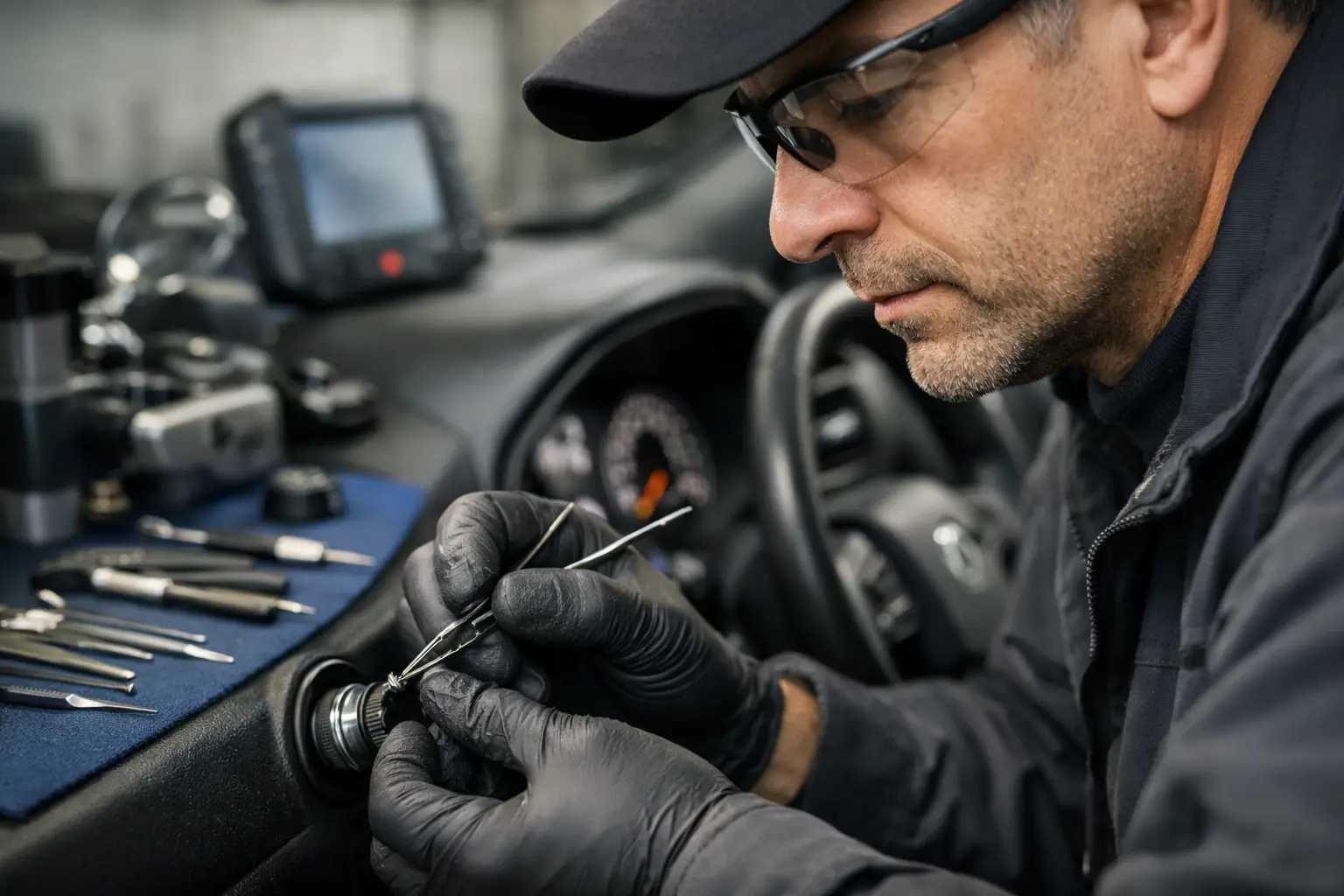
A snapped key in the ignition usually happens at the worst possible time - late for work, stuck in a parking lot, or sitting in your driveway with a car that will not start. Broken key extraction from ignition service is built for exactly that problem: remove the piece without damaging the ignition, then figure out what caused it and what it takes to get you moving again.
What broken key extraction from ignition service actually includes
This is more than pulling metal out of a slot. A proper service starts with checking how deep the key fragment is lodged, whether the ignition cylinder is already worn, and whether the steering wheel or ignition is under tension. Those details matter because what looks like a simple extraction can turn into an ignition repair if someone forces the wrong tool into the cylinder.
A locksmith will usually stabilize the area first, use extraction tools made for narrow keyways, and remove the broken piece with as little disturbance as possible. If the fragment comes out cleanly and the ignition is still in good shape, the next step may be cutting a new key or checking whether your transponder or chip key still needs programming.
If the ignition was already sticking before the break, the broken key may be a symptom, not the whole problem. That is where experience matters. You do not want someone to remove the fragment, hand you a bill, and leave you with an ignition that keeps jamming.
Why keys break in ignitions
Most drivers assume the key was weak. Sometimes that is true. More often, the real issue is wear on both sides - the key has been used for years, and the ignition cylinder has been getting rougher every month.
Older metal keys gradually thin out. Small bends, worn cuts, and metal fatigue make them easier to snap, especially when a driver has to jiggle the key to get the ignition to turn. Add a heavy keychain swinging from the ignition over time, and that extra weight can speed up cylinder wear.
Cold weather, dirt inside the ignition, poor copies of the original key, and forcing the wheel against the steering lock can also contribute. If the key broke while you were turning hard and the wheel was locked, the ignition may not be failing. If the key had been sticking for weeks, that is a different story.
What not to do when your key breaks in the ignition
This is where people turn a manageable service call into a more expensive repair. If part of the key is still visible, it is tempting to grab tweezers, a knife tip, a paper clip, or whatever is in the center console. That usually pushes the fragment deeper or scratches the keyway.
Super glue is even worse. People try to glue the broken half back together or attach something to the stuck piece and pull it out. If glue gets inside the ignition, extraction gets harder fast. The same goes for forcing the ignition to turn with the broken piece still inside. You can damage internal wafers and move the job from extraction to replacement.
The better move is simple: stop trying to turn it, do not spray random lubricants unless you know they are safe for the lock, and call for on-site help.
Can you remove a broken key yourself?
Sometimes, yes. If a large section of the key is sticking out and the ignition is not under tension, a careful person with the right extractor might get it out. But that is a narrow window.
Most ignition keyways are tight. Modern car ignitions are not forgiving, and damage is expensive. If the fragment is flush with the opening, buried deep, or the ignition was already acting up, DIY is a gamble. Saving the service fee does not help if you end up needing a new ignition cylinder, a rekey, and possibly programming for a replacement key.
For most drivers, the smart line is this: if it does not come out easily, stop. A fair locksmith should tell you upfront whether this looks like a basic extraction or a larger ignition issue.
How a locksmith handles ignition extraction on-site
The biggest advantage of a mobile automotive locksmith is that the work happens where the car is. You are not paying for a tow just to remove a broken key.
First, the technician confirms the make, model, and key type. That matters because older mechanical keys and newer transponder keys are different jobs once the extraction is done. After that, the ignition is inspected for signs of wear, obstruction, or damage.
If the ignition is still healthy
When the cylinder is in good condition, the broken piece is removed with specialized extractors and fine tools designed for automotive locks. The goal is to preserve the ignition exactly as it is. After removal, the locksmith checks whether the spare key works smoothly or whether a new key should be cut from code or from the remaining pieces.
If the ignition is worn or damaged
If the key broke because the cylinder is failing, extraction alone may not solve the problem. The ignition may need repair, rekeying, or replacement. A good technician explains that clearly before doing extra work. No vague pricing. No pressure. Just the actual condition of the ignition and the real options.
That straightforward approach matters in emergency service. When you are stranded, you need speed, but you also need to know the price is not going to double once the technician arrives.
How long does broken key extraction from ignition service take?
It depends on the vehicle and the condition of the ignition. A basic extraction can be quick. If the key fragment is accessible and the cylinder is healthy, the job may take only a short visit.
If the ignition is seized, the steering lock is involved, or the vehicle uses a more complex key system, it can take longer. Replacement keys with chips, fobs, or programming needs add another layer. The extraction itself may be fast, but getting you fully back on the road can take more time.
What matters most is honest assessment. A fast service is not just quick hands. It is showing up prepared, diagnosing the issue correctly, and not wasting your time with trial and error.
What affects the price
Drivers are right to ask this early. Locksmith pricing gets a bad reputation when companies quote one number on the phone and another at the car.
For broken key extraction from ignition service, the price usually depends on how deep the key is stuck, whether the ignition is damaged, the vehicle type, and whether a new key needs to be made or programmed. After-hours timing can also affect cost, though that should be stated clearly before work starts.
The fair way to handle it is simple: explain the likely range, inspect the car, and confirm the actual work before moving ahead. If the job changed because the ignition is damaged, the customer should hear that in plain English, not after the invoice is printed.
When extraction is enough and when you need more
This is where there is no one-size-fits-all answer. If your spare key turns smoothly after the fragment is removed, and the ignition shows no sticking or grinding, extraction may be all you need.
If every key has been hard to turn, if the ignition sometimes traps the key, or if the cylinder feels loose or rough, the break was probably a warning sign. In that case, replacing only the key may leave you right back in the same situation next week.
For drivers in San Diego who rely on their car daily, waiting on a failing ignition rarely pays off. A smaller repair done at the right time is usually cheaper than a full no-start situation in a parking lot later.
A few ways to prevent it from happening again
Use a fresh key if your current one is visibly worn or bent. Stop hanging a heavy bundle of keys from the ignition. If the key ever starts sticking, do not keep forcing it and hoping it sorts itself out.
Most important, pay attention to small changes. An ignition that suddenly feels rough is giving you notice. Taking care of it early is easier than dealing with a broken key when you are already in a rush.
Fast & Fair Locksmith is built for moments like this - urgent problem, on-site fix, clear pricing. If your key snaps in the ignition, the best next step is not force. It is getting the piece out cleanly and making sure the ignition is not about to strand you again.