
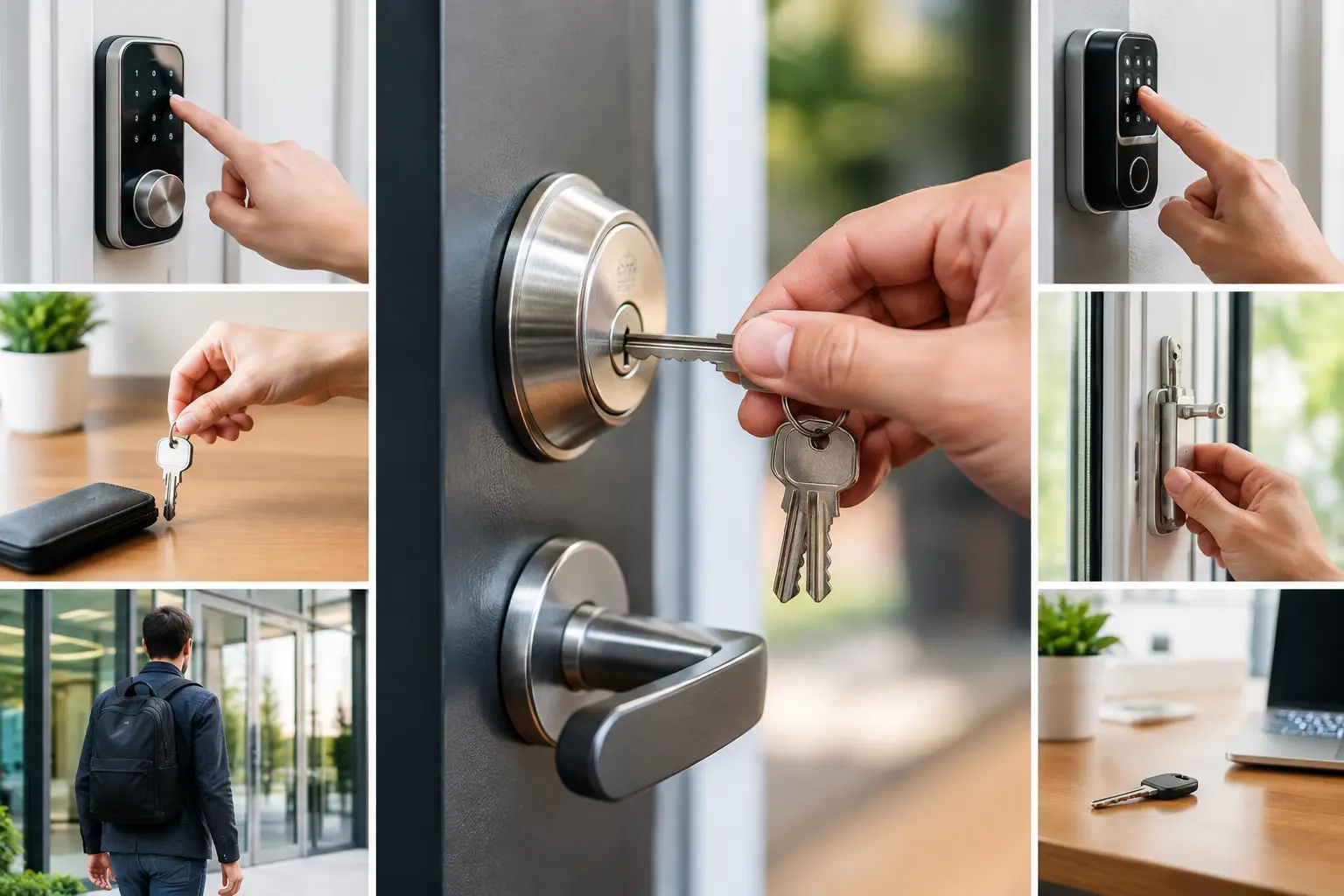
A lockout rarely happens because someone is careless. It happens during the rushed moments: taking out trash, switching cars, closing up a storefront, or stepping outside with a child or pet. The best ways to prevent lockouts are simple, but they work only when they become part of your routine.
A few small changes can prevent the call you never wanted to make at 11 p.m., in the rain, or before an important appointment. Focus on backups, habits, and access plans that fit the way you actually live or run your business.
1. Build a key-check habit before every door closes
The most reliable prevention tool costs nothing: pause before you close a door. Check for your keys, phone, and wallet before shutting the front door, car door, office, or gate behind you.
This is especially useful for doors that lock automatically. If your home has a self-locking knob or your vehicle locks when the door closes, make it a rule that keys stay in your hand, pocket, or bag before the door moves. Do not set them on a seat, counter, roof, or dashboard “just for a second.” Those are the seconds that create lockouts.
At home, a landing spot near the entrance helps. A bowl, hook, tray, or small wall organizer gives every key one obvious home. At work, the same rule applies: keep building keys, suite keys, and storage keys on a labeled ring rather than loose in a drawer.
2. Keep a spare key where it is useful, not obvious
A spare key can save a lot of time, but hiding one under a doormat, fake rock, or flowerpot is not real security. Those spots are the first places a person with bad intentions will check.
A better choice is leaving a spare with a trusted nearby person, such as a family member, neighbor, or friend who is usually available. If that is not practical, consider a quality lockbox installed in a discreet location. Property managers often use lockboxes because they provide controlled access without leaving a loose key exposed.
There is a trade-off. A lockbox adds convenience, but it must be secured properly and its code should not be shared widely. Change the combination when a tenant moves, a contractor finishes work, or someone who knew the code should no longer have access.
3. Give the right people a planned backup
Households and businesses run into trouble when only one person has the key. If one employee opens the shop, one roommate holds the apartment key, or one parent carries the only spare, a missed call or delayed trip can turn into a full lockout.
Decide who needs backup access and give it intentionally. For a home, that may mean each responsible adult has a working key. For a small business, it may mean two approved keyholders have access to the main entry, alarm process, and emergency contacts.
Avoid handing out copies without tracking them. Every extra key is both a convenience and a security responsibility. Know who has one, why they have it, and when it should be returned. When staff changes, roommates move out, or a relationship ends, rekeying may be safer than hoping every copy comes back.
4. Stop relying on worn or questionable keys
A key that sticks, bends, needs to be jiggled, or only works on the second try is warning you. Ignoring it can lead to a broken key, a damaged lock, or a lockout at exactly the wrong time.
Have worn keys duplicated before they fail, and use a clean, properly cut copy. If the original key is bent or heavily worn, making copies from it may repeat the problem. A locksmith can help determine whether the issue is the key, the lock cylinder, or the door alignment.
The same goes for vehicle keys and key fobs. Replace a weak fob battery before it dies, not after you are standing in a parking lot unable to get in or start the car. If your car uses a proximity fob, keep it separate from items that may accidentally press buttons or damage it.
5. Use smart locks with a real backup plan
Smart locks can reduce lockouts because they offer keypad codes, phone control, temporary access codes, or fingerprint entry. For busy Orange County households, rental properties, and small offices, that flexibility can be useful.
But smart does not mean foolproof. Batteries die, phones get lost, apps can fail, and not every keypad is easy to use in a hurry. Choose a lock with a physical key override or a clear emergency power option. Keep the mechanical backup key available to a trusted person, and replace batteries on a schedule instead of waiting for a low-battery warning.
For rentals or businesses, change access codes whenever authorized users change. A code shared with a former tenant, employee, cleaner, or contractor is no longer a convenience. It is an access problem waiting to happen.
6. Make car keys harder to leave behind
Car lockouts often start with one routine: setting keys down inside the vehicle while loading groceries, buckling a child into a seat, cleaning the car, or getting fuel. Once the door closes, the problem is immediate.
Keep your keys attached to something you already need, such as your wallet, work bag, or a visible lanyard. If you use a key fob, carry it in a zipped pocket rather than loosely in a coat or bag where it can fall out. Before closing the trunk, check that the fob is on you. This matters even with newer cars that claim to prevent keys from being locked inside. Technology helps, but it is not a reason to skip the check.
A spare vehicle key is worth considering, especially for families, commuters, and drivers who travel for work. Keep it with a trusted person or in a secure location away from the vehicle. Do not hide it on or under the car. That turns a lockout solution into a theft risk.
7. Fix doors and locks that create lockout risks
Some lockouts are mechanical, not personal. A deadbolt that catches, a latch that does not line up, a key that turns poorly, or a door that swells in heat can leave you stuck outside even with the right key.
Do not force a stubborn key. Forcing it can break the key inside the lock or damage internal components, making the repair more involved. Instead, have the door and lock inspected. A simple adjustment, lubrication suited to locks, or replacement of a failing part can prevent an after-hours emergency.
For property managers, regular checks of common doors, gates, mailboxes, and tenant entry hardware are practical maintenance. A lock that works poorly will eventually fail for someone, often when maintenance staff are unavailable.
8. Have an emergency plan before you need it
The best lockout prevention plan still needs a fallback. Save the contact information for a legitimate local locksmith before an emergency happens. When people search while stressed, they are more likely to accept vague pricing, long arrival windows, or surprise fees.
Ask clear questions when you call: What is the service-call charge? Is there an additional charge for the type of lock or vehicle? What is the expected arrival window? A professional should explain the process and pricing plainly before work begins whenever the situation allows.
Never try to force entry through a window, pry a door, or use improvised tools on a vehicle. Those attempts can cause costly damage, trigger alarms, or create a safety risk. If a child, pet, or vulnerable person is locked inside a hot vehicle or unsafe space, call emergency services immediately.
Lockouts are frustrating because they interrupt everything. A spare key plan, dependable hardware, and a five-second key check can keep a minor mistake from becoming a major delay. And if the unexpected still happens, Fast & Fair Locksmith is built around the part that matters most: getting help quickly and being treated fairly.