
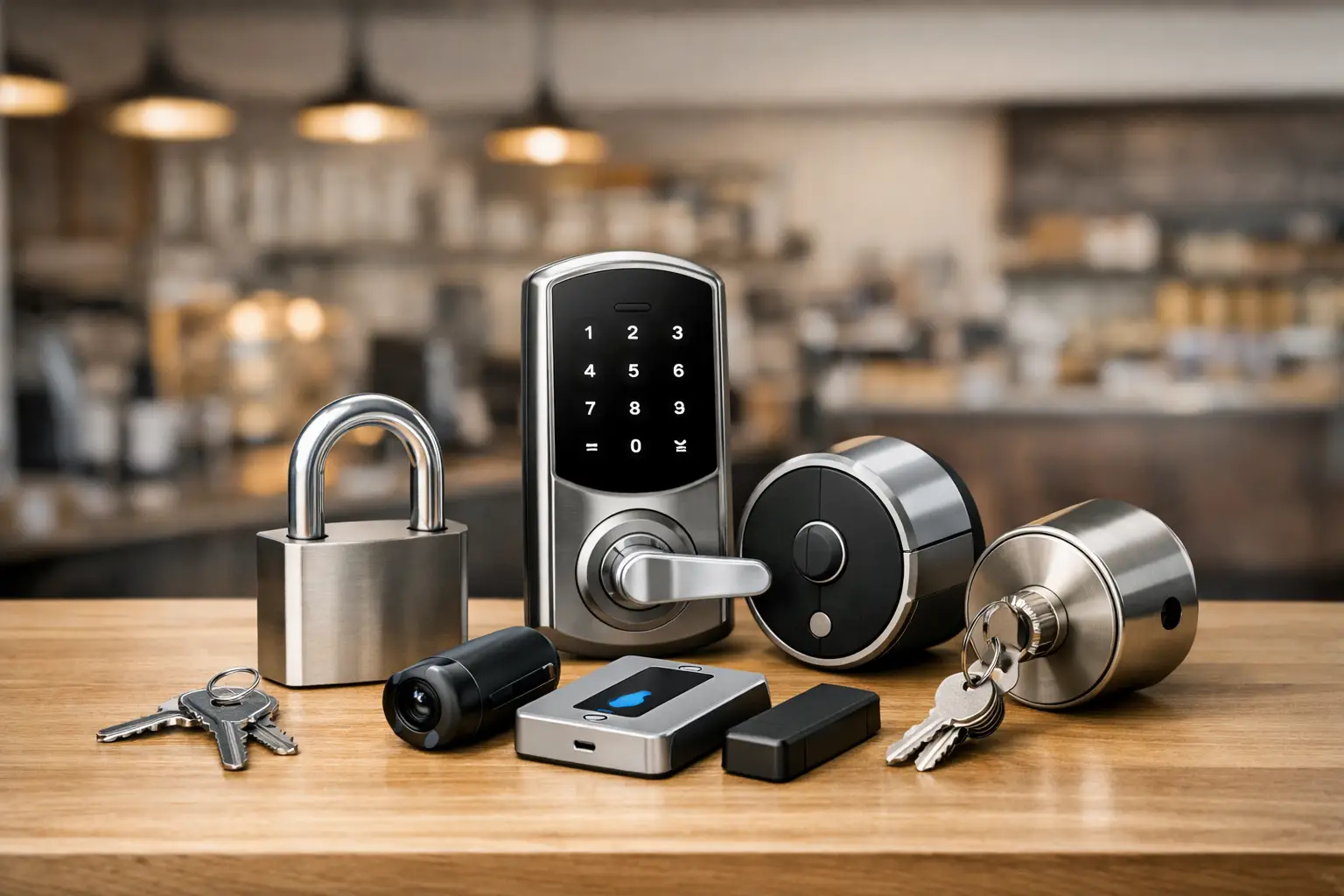
A flimsy front door lock can turn a minor weak spot into a real business problem fast. If you're looking for the best locks for small businesses, the right answer depends on your door, your traffic, your staff turnover, and how much risk you're actually managing.
What small businesses need from a lock
Most owners do not need the most expensive hardware on the market. They need a lock that holds up to daily use, controls who has access, and does not create constant headaches. A busy retail shop has different needs than a medical office, warehouse bay, salon suite, or small property management office.
That is where bad lock decisions usually start. People buy based on price alone, or they buy based on marketing. Neither tells you how the lock will perform after a year of employees coming and going, customers pulling hard on the door, and keys getting copied without anyone tracking them.
For most commercial spaces, the lock has to do three things well. It needs to resist forced entry, support practical key control, and make everyday use simple for staff. If it fails at any one of those, it stops being a good value.
The best locks for small businesses by use case
1. Commercial grade 1 deadbolts
If you want one of the safest bets for a storefront or office entry, start here. A commercial grade 1 deadbolt is tough, proven, and built for higher traffic than the average residential lock. This is often the right choice for a main exterior door where strength matters more than convenience features.
The big advantage is reliability. A good deadbolt with proper installation gives you real resistance against kick-ins and forced entry attempts. The trade-off is convenience. Staff still need keys unless you pair the deadbolt with another access solution.
This is a strong fit for small offices, back doors, and businesses that want durable security without getting complicated.
2. Heavy-duty commercial lever locksets
For businesses with regular employee use, a commercial lever lockset often makes more sense than a knob lock. Levers are easier to use, better for accessibility, and built for the wear that comes from constant opening and closing.
That said, a lever lock by itself is not always enough for an exterior door. On many commercial doors, the better setup is a lever lockset paired with a deadbolt. The lever handles traffic. The deadbolt adds stronger after-hours security.
If your front door only has one weak lever lock and no deadbolt, that is usually worth fixing.
3. Keypad locks for employee access
A keypad lock can be a smart move when staff turnover is common. Instead of chasing down old keys or paying to rekey every time someone leaves, you change the code and move on. That saves time and reduces the risk of ex-employees still having access.
This is one of the best locks for small businesses that need simple access control without going fully digital. Restaurants, salons, shared office spaces, and smaller service businesses often like keypad systems because they are straightforward and quick to manage.
The catch is quality matters a lot. Cheap keypad locks can be unreliable, especially on doors that get slammed or exposed to weather. Battery dependence is another factor. If you go this route, choose commercial-grade hardware and keep backup access in place.
4. Smart locks with audit trails
If you want more control, smart locks bring useful features to the table. You can assign unique codes, set schedules, revoke access without collecting keys, and in some systems, see who entered and when. For businesses with cleaning crews, vendors, part-time staff, or multiple managers, that can be a real operational upgrade.
But this is not a case where newer always means better. Some smart locks are excellent. Others are glitchy, app-heavy, and more trouble than they are worth. Wi-Fi dependency, battery maintenance, and software issues can create headaches if the hardware is not chosen well.
For a small business, smart locks make the most sense when access changes often or when you need accountability. If your team is stable and your security needs are basic, a strong mechanical setup may still be the better buy.
5. Mortise locks for higher-traffic commercial doors
Mortise locks are common on many commercial properties for a reason. They are strong, durable, and designed for serious daily use. If your building already has mortise hardware, replacing it with the wrong type of lock can create problems with fit, function, and security.
A good mortise lock can combine latch and deadbolt functions in one body, which makes it a popular choice for office buildings, older storefronts, and mixed-use commercial spaces. They usually cost more than basic cylindrical locks, but they also tend to hold up better over time.
If you have a commercial aluminum frame door or older business entry, this may be your best long-term option.
6. Restricted key systems
A lot of small business owners worry about break-ins but overlook key control. That is a mistake. If employees can copy keys at any hardware store without your approval, you do not really control access.
Restricted key systems solve that problem. These locks use protected keyways and controlled duplication, which means unauthorized copies are much harder to make. For businesses with multiple staff members, former tenants, maintenance vendors, or turnover, this can be one of the most practical upgrades available.
It is not flashy, but it works. And compared with the cost of repeated rekeying or a preventable access issue, it is often money well spent.
7. Panic hardware with secure trim
If your business has occupancy or fire code requirements, the right lock may not just be about security. It may also be about safe exit. Panic bars are often required on certain commercial doors, especially in spaces with public access.
The important part is making sure the exterior trim, latch, and overall setup are secure. A panic device that meets code but leaves weak exterior access points is not a good setup. This is where hardware selection and installation matter. The door, frame, latch, and closing action all have to work together.
For restaurants, retail spaces, and public-facing businesses, panic hardware may be necessary, but it still needs to be chosen with security in mind.
How to choose the right lock without overspending
Start with the door itself. A strong lock on a weak hollow door, bad frame, or loose strike plate is not a security plan. It is just expensive hardware on a vulnerable opening. Before choosing a lock, look at the whole entry.
Then think about who needs access and how often that changes. If you have one owner and two long-term employees, a high-quality mechanical lock may be all you need. If you rotate staff often, manage vendors, or need different access levels, keypad or smart access starts making more sense.
You should also be honest about your risk level. A jewelry shop, dispensary-adjacent tenant, or business handling cash has different security demands than a small design studio with limited foot traffic. The best locks for small businesses are not the same across every industry, and anyone selling one answer for every door is probably oversimplifying.
Common lock mistakes small businesses make
The most common mistake is using residential-grade hardware on a commercial door. It may look fine at first, but it wears out faster and usually offers less protection. Another common problem is relying on one lock alone when the door really needs layered security.
Poor installation is another issue that gets ignored. Even a quality lock can fail early if it is misaligned, loosely mounted, or installed on a damaged frame. Cheap labor often gets expensive later.
Then there is the key problem. Lost keys, unreturned keys, copied keys, and no record of who has what. If your business has had the same lock setup through multiple employees or tenants, rekeying or upgrading should be on the table.
When it makes sense to call a locksmith
If you are changing ownership, moving into a new unit, dealing with employee turnover, replacing damaged hardware, or trying to secure a problem entry, this is usually not a guess-and-check job. A commercial locksmith can tell you whether you need rekeying, new hardware, door reinforcement, or a different access setup entirely.
For small business owners in San Diego, speed matters when a lock fails or a door stops securing properly. So does fair pricing. Fast & Fair Locksmith focuses on practical fixes, clear recommendations, and getting businesses secured without the runaround.
The right lock should make your business harder to target and easier to manage. If your current setup does neither, that is your sign to change it before it becomes an emergency.