
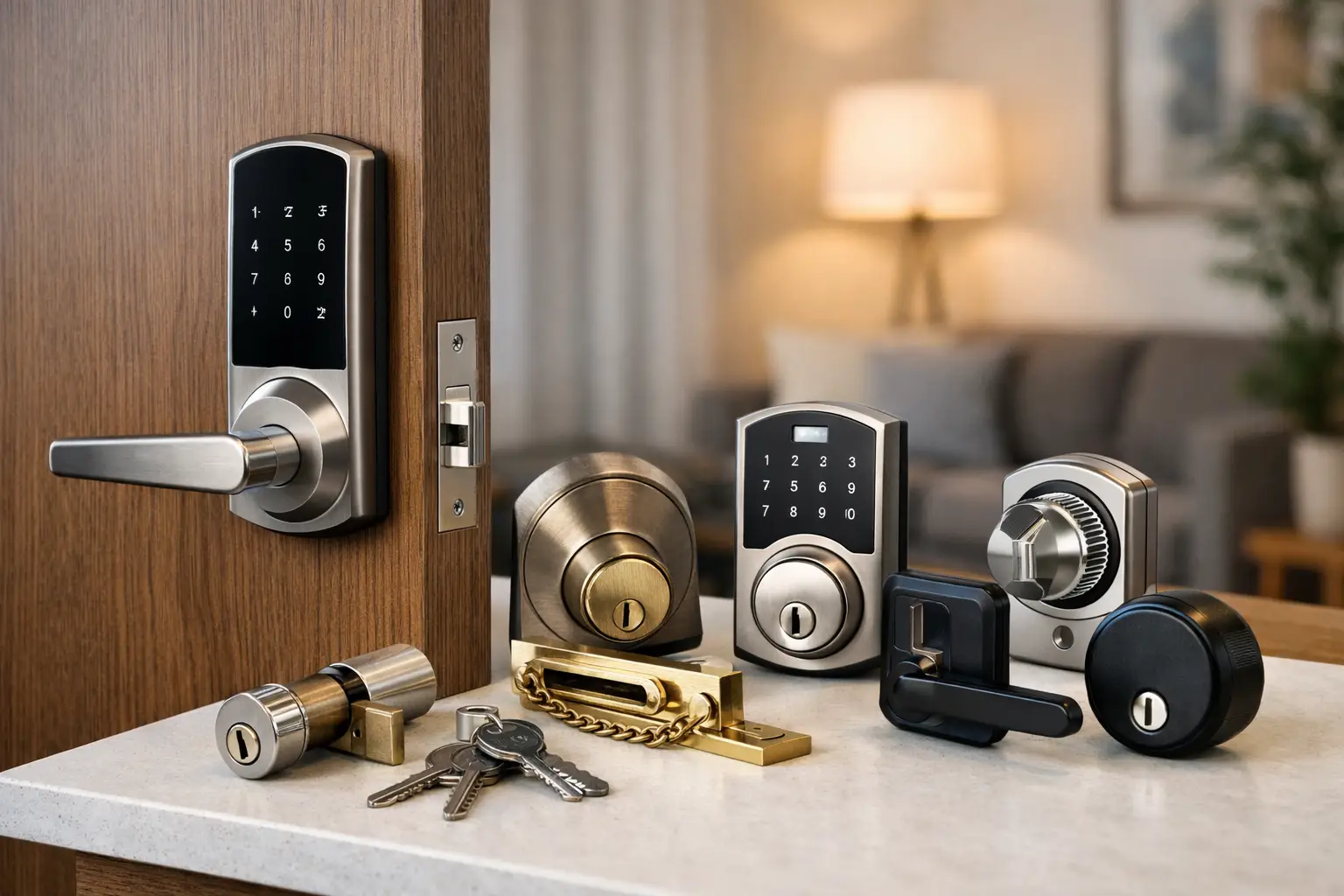
That cheap lock on your apartment door usually feels fine - right up until a breakup, a lost key, a package theft in the hallway, or a neighbor who keeps testing the wrong unit. The best locks for apartment doors are not always the most expensive ones. They are the locks that fit your door, your lease, and your real risk level without creating a problem with management.
Apartment security is different from single-family home security. You may not be allowed to drill new holes. You may need landlord approval before changing hardware. And if you install the wrong smart lock, you can end up locked out, fined, or told to remove it. So the right move is not just buying a stronger lock. It is choosing one that adds security without creating a new headache.
What actually matters in an apartment door lock
Start with the door itself. A great lock on a weak hollow-core door only does so much. The frame, strike plate, screw length, and deadbolt alignment matter just as much as the brand on the box. In many apartment break-ins, the failure is not the lock cylinder. It is the frame splitting, the short screws pulling out, or the latch not catching properly because the door never lined up right.
That is why the best apartment lock setup is usually layered. You want a solid primary lock, a properly installed strike area, and in some cases a renter-friendly secondary device for when you are home. More hardware is not always better, but better hardware and better installation usually are.
Best locks for apartment doors by situation
1. Single-cylinder deadbolt
If your apartment door allows a standard deadbolt, this is still the baseline choice. A good single-cylinder deadbolt is simple, durable, and familiar to landlords, tenants, and locksmiths. It locks from the inside with a thumb turn and from the outside with a key.
For most renters, this is the best balance of security and practicality. It is harder to bypass than a basic knob lock, it does not depend on batteries, and it is easy to rekey if a key goes missing. If your current deadbolt feels loose, sticky, or cheap, upgrading to a better-grade model can make a real difference.
The trade-off is convenience. If you want app control, codes, or temporary access for dog walkers and cleaners, a plain deadbolt will feel old-school. But plain works, and plain fails less often.
2. Keypad deadbolt
A keypad deadbolt makes sense if you are always juggling keys, kids, deliveries, or shared access. You can create a code instead of handing out copies, and you can change that code fast if someone should no longer have access.
This is one of the best locks for apartment doors when lease rules allow electronic hardware. Just make sure the unit is approved for your specific door prep. Some apartment doors have tight clearances, fire-rated requirements, or building rules that limit what can be installed.
The downside is simple: electronics can fail. Batteries die. Motors wear out. Cheap units can be temperamental. If you go this route, choose a model with a physical key override and stay on top of maintenance.
3. Smart lock retrofit
A retrofit smart lock replaces only the interior thumb turn and keeps the existing exterior hardware. For renters, that matters. It often means no visible change from the hallway side and less chance of violating building rules.
This can be a smart option if you want phone control or remote locking without fully changing the lock. It is also easier to reverse when you move out. But not every deadbolt is compatible, and some retrofit units struggle if the door or bolt does not move smoothly already.
If your deadbolt sticks now, a smart retrofit will not fix that. It may make it worse. Mechanical problems need mechanical fixes first.
4. High-security deadbolt
A high-security deadbolt is built to resist picking, drilling, and forced entry better than bargain hardware. This is worth considering if you live in a building with frequent traffic, past security issues, or key control problems.
This option is especially useful when you do not know how many copies of an old key are floating around. Some high-security systems use restricted keyways, which makes unauthorized duplication much harder. For property managers and tenants dealing with turnovers, that can be a big advantage.
The trade-off is cost. These locks are more expensive to buy and service. For some apartments, that extra spend is justified. For others, a quality standard deadbolt plus a proper rekey is enough.
5. Double-cylinder deadbolt
This deadbolt requires a key on both sides. It can prevent someone from breaking nearby glass and reaching inside to unlock the door. In the right setup, that extra control helps.
But this lock has a serious downside. It can slow exit during a fire or emergency. In some areas and buildings, it may not be allowed on certain doors. In apartments, that code issue matters more than personal preference.
If your door has glass close enough to the thumb turn to create risk, ask before installing this type. Never assume it is permitted just because it is sold in stores.
6. Door reinforcement lock
A reinforcement lock or door jamb device is not always a primary lock replacement. It is an add-on that strengthens the door against kick-ins. Some versions are renter-friendly and install with minimal changes, while others require more permanent mounting.
This is a strong choice if your concern is forced entry rather than key control. It does not replace a deadbolt, but it can buy valuable resistance. If you are home at night and want another layer, this is often more useful than a fancy smart feature.
Just check your lease first. Some buildings allow temporary interior devices and some do not.
7. Portable apartment door lock
Portable locks are popular with renters because they are inexpensive and usually do not require drilling. They are typically used when you are inside the unit and want extra privacy or resistance.
These are best treated as supplemental devices, not true front-line security hardware. Quality varies a lot. Some work well on certain door gaps and latch shapes. Others barely fit or fail under pressure.
They can be useful for travel or short-term peace of mind, but they are not a substitute for a properly working deadbolt.
8. Chain lock or swing bar
Chain locks and swing bars are common in older apartments. They offer limited opening for talking through the door and a little extra resistance when you are inside.
They are better than nothing, but they are not high-security devices. Most should be seen as secondary hardware only. If this is the main thing making you feel safe, your door likely needs a better plan.
When the lock is not the real problem
A lot of apartment lock complaints are not about the lock at all. The key sticks because the door sags. The deadbolt will not throw fully because paint built up in the strike. The latch barely catches because the frame shifted. These issues make even a good lock perform badly.
Before replacing hardware, look at alignment, loose hinges, short strike screws, and visible frame wear. A fast repair can sometimes do more for security than buying a trendier lock. This is where people waste money - they replace the lock but keep the same weak install.
What renters should ask before changing locks
The first question is simple: are you allowed to change it? Some landlords require written approval. Some allow replacement only if management gets a copy of the key or code. Others want all lock work handled by their maintenance team or approved locksmith.
The second question is whether you need a full replacement or just a rekey. If you moved in recently and are worried about old keys in circulation, rekeying is often the cleaner and cheaper fix. You keep the hardware, but old keys stop working.
The third question is what problem you are trying to solve. Lost keys, bad break-in resistance, easier access for family, and better nighttime security all point to different lock choices. There is no one-size-fits-all answer, and anyone selling you one should make you cautious.
The best lock setup for most apartments
For most renters, the safest practical setup is a quality single-cylinder deadbolt or approved keypad deadbolt, properly installed, with the door frame reinforced if needed. Add a secondary interior device only if your lease allows it and you actually plan to use it.
If key control is your biggest concern, rekey first. If convenience matters most, consider a keypad or retrofit smart option. If forced entry is the fear, focus on the strike plate, frame, and reinforcement before chasing extra features.
And if your current lock is jammed, loose, spinning, or obviously failing, do not wait for it to become an after-hours lockout. Fast and Fair Locksmith sees this all the time across San Diego - people live with a bad lock for months, then it quits at the worst possible moment.
A good apartment lock should make your life quieter, not more complicated. If a lock adds stress, violates your lease, or leaves you guessing whether it will work tonight, it is the wrong lock. Pick the option that fits your door, your building rules, and your actual risk, then make sure it is installed right. That is what keeps a lock from being just hardware and turns it into real security.