
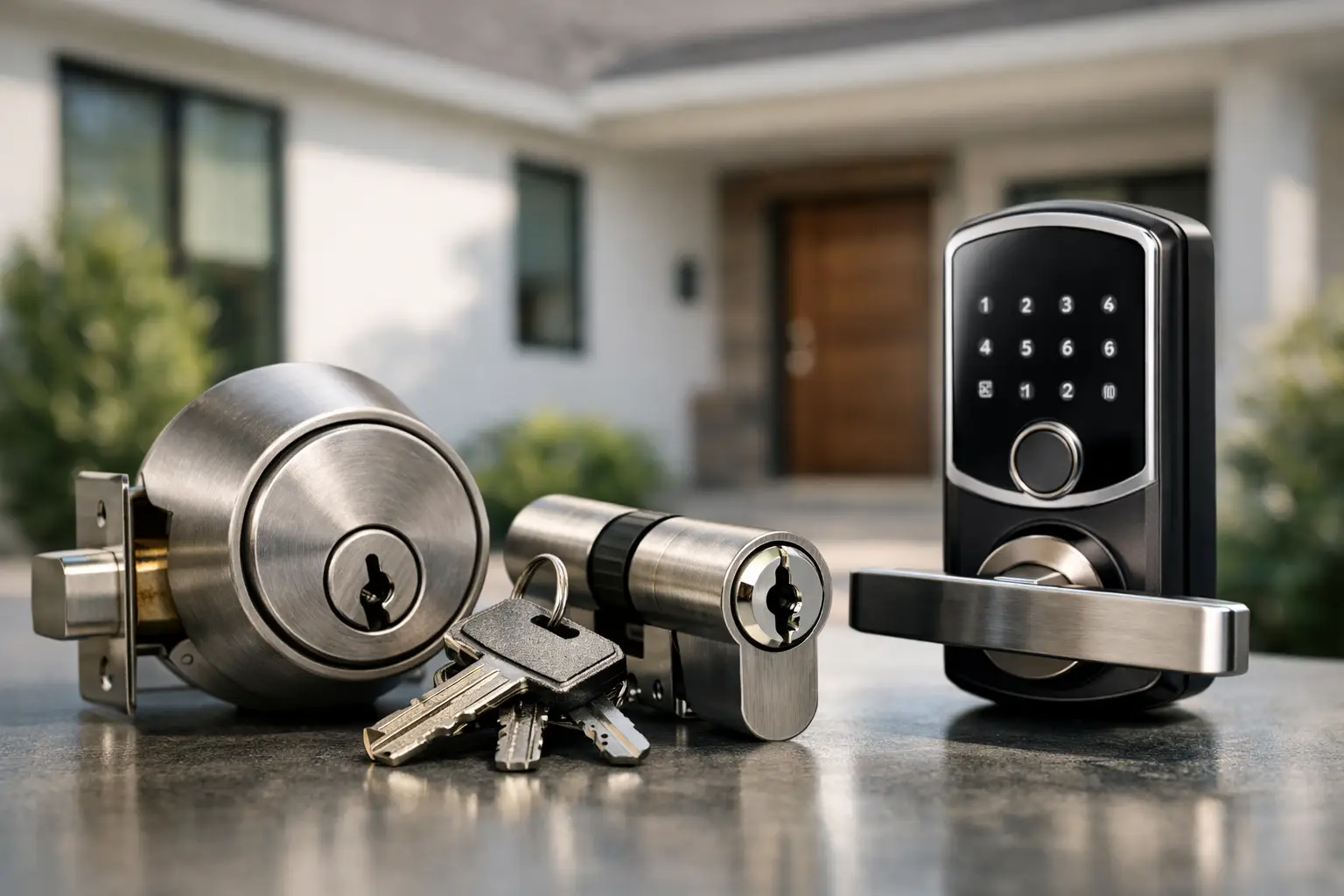
A deadbolt is only as strong as the door, frame, and strike plate holding it. That is why the best high security locks for home are not simply the most expensive locks on the shelf. They combine a strong deadbolt, a pick- and drill-resistant cylinder, controlled key access, and proper installation.
For Orange County homeowners, the right choice often comes down to one question: are you trying to stop forced entry, control who can copy keys, or both? A fair recommendation starts there - not with an oversized quote for hardware you do not need.
What Makes a Home Lock High Security?
“High security” gets used loosely. A heavy-looking deadbolt may resist kicking but still use a basic cylinder that can be bumped, picked, or easily rekeyed by someone with an unauthorized copy. On the other hand, a sophisticated key cylinder does not help much if the strike plate is attached with short screws into thin trim.
Look for a deadbolt with an ANSI/BHMA Grade 1 rating. This is the top residential and light-commercial grade for durability and forced-entry resistance. A one-inch throw bolt, solid metal construction, and a reinforced strike are also baseline features worth paying for.
The cylinder matters just as much. Better cylinders use security pins, hardened inserts that slow drilling, and designs intended to resist bumping and picking. Some use restricted keyways, meaning duplicates can only be made through authorized channels. That is a real advantage for rental homes, households with contractors, and anyone who has handed out keys over the years.
A lock should also fit the door correctly. A Grade 1 deadbolt installed poorly can perform worse than a properly installed Grade 2 lock. Door thickness, backset, frame condition, and alignment all affect how the lock works when it counts.
Best High Security Locks for Home by Need
There is no single best lock for every front door. These are the lock categories that make sense for most homeowners, along with the trade-offs that sales pitches often leave out.
Best all-around choice: Grade 1 deadbolt with a security cylinder
For most homes, a mechanical Grade 1 deadbolt paired with a quality security cylinder is the practical answer. It gives you dependable physical strength without batteries, app issues, or a complicated learning curve.
A commercial-style deadbolt such as a Schlage B660 can be a strong starting point when installed with a reinforced strike. For higher key protection, ask about upgrading to a UL 437-listed cylinder or a cylinder from a recognized high-security system. The exact compatibility depends on the lock body and door prep, so this is worth checking before buying parts.
This setup is a good fit for a primary entry door, side door, garage-to-home door, or a rental where reliability matters more than remote features.
Best for key control: Restricted-keyway systems
If your real concern is who may still have a key, a restricted-keyway system is often the better investment. Systems from established brands such as Medeco and Mul-T-Lock are designed around stronger cylinders and controlled duplication. A person cannot usually walk into a hardware store and make a copy from the key.
This does not mean no one can ever get a duplicate. It means the process is controlled, typically through an authorized locksmith and a registration method. That helps property owners track access and makes rekeying more meaningful after a tenant move-out, breakup, employee departure, or lost key.
The trade-off is cost. Restricted keys and cylinders cost more than standard hardware, and future copies may require authorization. That inconvenience is exactly what creates the security benefit.
Best for smart-home convenience: Smart deadbolt plus door reinforcement
Smart locks are useful when you need temporary codes, remote access, or a record of who entered and when. They can work well for busy families, vacation properties, and landlords who do not want to collect physical keys after every turnover.
But a smart lock is not automatically a high-security lock. Many are built for convenience first. Check the deadbolt's ANSI/BHMA grade, use a strong strike plate, and choose a model with a physical key override you trust. Also think about battery maintenance. A great electronic lock is not helpful if it is ignored until the low-battery warning becomes an emergency.
For a high-traffic front door, many homeowners get the best result from a quality smart deadbolt on the main entry and a Grade 1 mechanical deadbolt on secondary doors. Keep the security plan simple enough that everyone in the house can use it.
Best budget upgrade: A properly installed Grade 1 deadbolt
A basic Grade 1 deadbolt is often a major improvement over the builder-grade lock installed on many homes. It will not provide restricted key control, but it can make forced entry significantly harder when paired with the right strike plate and screws.
This is a smart choice when the budget is limited or when you need to secure several doors at once. Spend money first on the doors that provide the easiest entry: the front door, the garage entry door, and any rear or side door hidden from street view.
Do Not Upgrade the Lock and Ignore the Door
A determined intruder may attack the frame instead of the cylinder. That is why lock hardware should be installed with a reinforced strike plate secured by three-inch screws that reach the wall framing, not just the door jamb. If the wood around the strike is split, soft, or damaged, repair that before relying on any new deadbolt.
Check the door itself, too. A hollow or warped exterior door, loose hinges, weak glass panels near the thumb turn, or a large gap around the frame can limit the value of an expensive lock. On an outswinging door, hinge security also deserves attention because exposed hinge pins can become the weak point.
This is not an argument for turning your home into a fortress. It is about avoiding the common mistake of buying premium hardware while leaving the easiest failure point untouched.
How to Choose Without Overpaying
Start by deciding what problem you are solving. If you lost keys or recently moved in, rekeying may be enough. If keys have been copied without your knowledge, a restricted-keyway cylinder may make more sense. If the existing deadbolt is loose, worn, or light-duty, replacement is the better call.
Ask for the hardware grade, the cylinder type, and the full installed price before work begins. A clear quote should distinguish the service call, labor, lock hardware, rekeying, and any door or frame repair. Be cautious when a provider gives a very low phone quote but cannot explain what lock is included or what could change the price on arrival.
You do not need the highest-priced lock for every door. A layered approach is usually more sensible: put your strongest cylinder and deadbolt on the primary entry, use solid Grade 1 hardware where needed, reinforce the frames, and rekey everything to one controlled key plan when possible.
Installation Is Part of the Security Rating
Even excellent hardware can bind, fail to latch, or leave the door vulnerable if it is misaligned. The bolt should extend fully into the strike without needing to lift, push, or pull the door. The thumb turn should operate smoothly, and the exterior cylinder should sit straight and secure.
After installation, test the lock with the door open and closed. Then test it again from outside with your regular key. Small alignment problems tend to get worse with heat, moisture, and normal settling, so address them early.
If you need a lock change after a break-in, lost keys, tenant turnover, or a move, FAST & FAIR LOCKSMITH can help assess the whole entry point, not just swap the visible lock. The right fix should be fast, clear, and priced fairly.
The best upgrade is the one that closes your actual weak point. Choose a lock that fits your door, your access needs, and your budget - then make sure the frame is ready to back it up.