A front door lock usually gets attention after something goes wrong - a lost key, a break-in scare, a jammed deadbolt, or a move into a new place with no clear idea who still has copies. That is why choosing the best locks for front doors is less about buying the fanciest hardware and more about picking the right level of security for your house, your routine, and your budget.
The truth is simple. No lock is perfect. Some are built for brute-force resistance. Some make daily access easier. Some do both pretty well. The right choice depends on whether you care most about physical strength, key control, smart features, or fast replacement when an old lock starts failing.
What actually makes a front door lock good
A good front door lock does three jobs well. It stands up to forced entry, works reliably every day, and fits the way you live.
That first part matters most. A lock should resist kicking, prying, drilling, and tampering. But strength on paper does not always mean strength on your door. A heavy-duty deadbolt installed in a weak frame is only half a solution. The strike plate, the screws, the door material, and the alignment all matter.
Daily reliability matters too. If a lock sticks, misaligns, or needs constant jiggling, people stop using it correctly. That is when doors get left unlocked or only partially latched. A secure lock that is annoying to use can turn into a bad security habit.
Then there is fit. A single-family home, a rental, and a busy property with kids, deliveries, and dog walkers do not all need the same setup. The best choice is often the lock that people will actually use every single time.
Best locks for front doors by type
1. Single-cylinder deadbolt
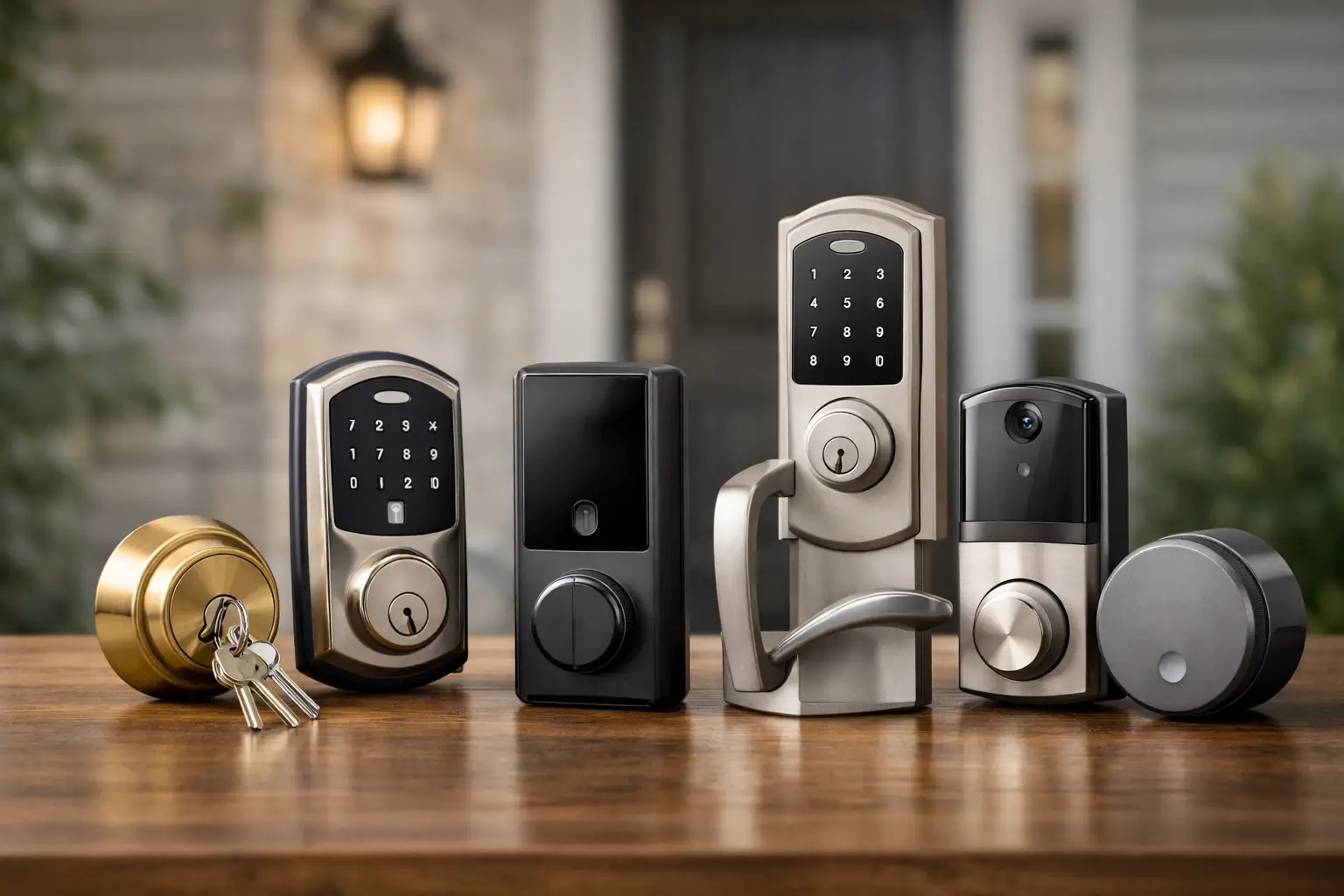
If you want the safest all-around answer for most homes, start here. A single-cylinder deadbolt uses a key on the outside and a thumb turn on the inside. It is simple, reliable, and still the standard recommendation for residential front doors.
A quality deadbolt from a reputable brand gives you strong basic protection without adding complexity. It is usually the best value too. If your current lock is old, loose, or worn out, replacing it with a properly installed Grade 1 or solid Grade 2 deadbolt can make a real difference.
The trade-off is convenience. You still need a key unless you pair it with another access option. For many homeowners, that is not a problem. For others, especially families that constantly forget keys, it can become one.
2. Double-cylinder deadbolt
This deadbolt needs a key on both sides. It is sometimes used on doors with nearby glass, where someone could break the glass and reach inside to turn a thumb latch.
That extra protection can help in the right setup, but it comes with a serious downside. In an emergency, needing a key to get out can slow people down. That is why local code rules and fire safety concerns matter here. This is not a lock to install just because it sounds stronger.
For some homes, it makes sense. For others, it creates more risk than benefit. This is one of those it-depends choices where the door design matters more than the marketing.
3. Keypad deadbolt
A keypad deadbolt gives you code access instead of requiring a physical key every time. For busy households, rentals, and anyone tired of key handoffs, it can be one of the best locks for front doors simply because it solves a daily problem.
The biggest benefit is control. You can create codes for family, guests, cleaners, or contractors without making extra keys. If access needs to change, you update a code instead of replacing hardware.
The trade-off is maintenance. Batteries need to be changed. Cheaper models can get temperamental in bad weather or after heavy use. A good keypad lock is practical. A cheap one can turn into a lockout waiting to happen.
4. Smart lock
Smart locks add app control, remote access, activity logs, and sometimes integration with cameras or home systems. For some homeowners, that is useful security. For others, it is just one more thing to troubleshoot.
A good smart lock can let you check whether the door is locked, unlock it for a delivery or family member, and manage access without being home. That is appealing if you travel, manage a rental, or want more visibility over who comes and goes.
But smart does not automatically mean more secure. The lock still needs a strong physical deadbolt, good installation, and a secure door frame. And if you do not want to deal with battery alerts, app glitches, or Wi-Fi issues, a traditional deadbolt may still be the better call.
5. Mortise lock
Mortise locks are common on older homes, upscale properties, and some commercial-style entries. The lock body fits into a pocket cut into the door, and the setup is often more substantial than a basic cylindrical lock.
When the hardware is high quality and the door is built for it, a mortise lock can be an excellent front door option. It often feels stronger and operates more smoothly than cheaper residential hardware.
The catch is cost and compatibility. Replacing or upgrading a mortise lock is usually not a quick hardware-store swap. If your door already has one, it often makes sense to repair or upgrade within that system instead of forcing a different type of lock onto the door.
6. Handleset with deadbolt
A handleset looks polished and can improve curb appeal, but the key point is this: the decorative handle is not the security feature. The deadbolt above it is.
A solid handleset paired with a strong deadbolt can be a great setup for a main entry door. Just do not confuse size or style with strength. Some impressive-looking entry sets have weak internal parts. The deadbolt rating and installation quality matter much more than the finish.
If you are upgrading for appearance and security, choose the deadbolt first and treat the lower handle as secondary.
7. High-security deadbolt
If key control is a big concern, a high-security deadbolt is worth a look. These locks are designed to resist picking, bumping, drilling, and unauthorized key duplication better than standard hardware.
This is often the right move for homeowners who have had repeated turnover of housekeepers, contractors, tenants, or lost keys. It can also make sense if you have already upgraded the door and frame and want the lock to match that level of security.
The downside is price. You will pay more upfront, and replacement keys or service can be more specialized. But for some people, better key control is exactly what they need.
What matters more than the brand name
People often shop locks by brand first. That is understandable, but it is not the smartest place to start. A decent lock installed correctly will usually beat a premium lock installed badly.
Look at the grade, the bolt length, the strike plate, and the screws anchoring that strike into the framing. A reinforced strike plate with long screws can add real resistance against kick-ins. So can fixing a misaligned door that prevents the deadbolt from seating fully.
Door condition matters too. If the frame is cracked, the jamb is weak, or the door is warping, replacing the lock alone may not solve the problem. This is where a lot of people waste money - they buy better hardware but leave the weak point untouched.
When to replace instead of rekey or repair
Not every front door needs a full lock replacement. If the hardware is good quality and working well, rekeying may be the smarter and cheaper option after a move, breakup, tenant turnover, or lost key.
Repair makes sense when the issue is mechanical and the lock itself still has life left in it. Misalignment, sticking, or latch problems can often be corrected without changing everything.
Replacement is usually the better call when the lock is worn out, outdated, damaged, low quality, or no longer fits how you use the door. If you are forcing the key, fighting the latch, or dealing with repeated issues, you are probably past the point where a quick fix is the fair answer.
The best front door lock for most people
For most homes, the best front door lock is a quality single-cylinder deadbolt, or a keypad deadbolt if convenience is a top priority. That covers the majority of real-world needs without overcomplicating the setup.
If you want stronger control over copies, step up to a high-security deadbolt. If you want remote access and code management, choose a smart lock from a proven manufacturer and make sure the physical installation is solid. If your door has glass close to the interior thumb turn, talk through safety and code concerns before choosing a double-cylinder option.
The best locks for front doors are the ones that match the door, the people using it, and the actual risk. Not the one with the flashiest box. Not the cheapest one on the shelf. And not the one a salesperson pushes just to raise the ticket.
If your lock is sticking, outdated, or just not giving you confidence anymore, trust that instinct. Front door security should feel straightforward: the door closes right, the lock works right, and the price to fix it should make sense.